Tuesday, October 30, 2012

River Level Predictions (updated 10/30 10:15am)

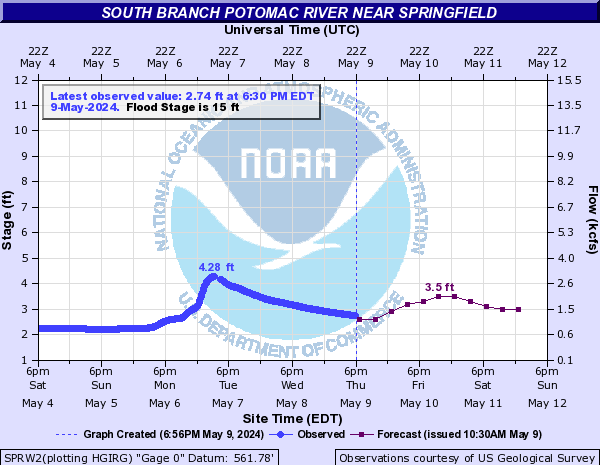
NOAA 72 hour, river level predictions are understandably and necessarily conservative.  As an example, our road floods at around eight feet, so I appreciate knowing about the possibilities in advance.  NOAA also publishes the likelihood of specific river levels based on historical modeling, if you want to decide for yourself.

So I'm doing an experiment here.  I'm publishing static images of the gauge prediction (hydrograph) throughout the storm, and then also publishing the automatically updated version of the hydrograph at the bottom of this post.

The Satuday, 10/27 prediction for Tuesday at 7am, copied at 7pm, Saturday, 10/27/2012:

Snapshot Saturday, 10/27/2012, 7pm

Here is another forecast, almost 41 hours later (Monday at 1:15pm) than the one above:


A significantly reduced threat - 10am on Tuesday (10:15am)


The live (automatically updated) image for the same gauge:

Automatically update image.

Monday, October 29, 2012

NASA Super Rapid Scan Video

This is from the NASA Earth Observatory YouTube Channel.  There's lots of great Hurricane Sandy video there.

Sunday, October 28, 2012

Construction Progress

We've nearly enclosed our new 60x36 shop, garage, and future teacher-training center along the South Branch.


Saturday, October 27, 2012

This is going to be bad.

This rainfall projections continue to evolve.  At 5:30am, the entire West Virginia portion of South Branch watershed (everything downstream of Bluegrass, Virginia) was within the 6" rainfall zone.  (Click to enlarge and check the lower left corner for the last update.)
http://www.hpc.ncep.noaa.gov/qpf/zoom/Rainfall_Days_1-5.gif

Wednesday, October 24, 2012

Alternative Agriculture

We have lots of inexpensive land in Hampshire County, and you can still find larger tracts of land for under $5000/acre.  But just 100 miles east, there are several places where land sells for over $5 million an acre, or closer to $8 million per acre in commercial districts.  People there are exploring alternative agriculture practices that could be replicated in backyards, porches, or even rooftops, just about anywhere.   In this video clip, you'll see an Oakland, California man has developed small-scale, high output practices with very low impact on the environment.

Friday, October 19, 2012

Saturday, October 13, 2012

Frosty morning in Hampshire Co.?

Our temperatures fell to just below freezing along the river here in Green Spring, WV, but because we're down here at 600', surrounded by mountains on four sides and the river on three sides, we did not have a frost.  However, our friends up on Jersey Mountain, including Steve and Ruth at Church View Farm, apparently received a heavy frost.  Tell us where you are and whether you were frosted this morning.


Yes, I know the "North Fork South Branch Potomac River" label on the Google map above is wrong.  We've reported it.

Friday, October 5, 2012

From Meanders to Mitigation: FEMA Flood Maps

From Lauren's Meanders to Mitigation blog: FEMA Flood Maps:

If anyone is interested in learning about floodplains and how that information is used for flooding mitigation, flood zone delineation, and building requirements, here is a link to the Map Service Center. Let me know if you have any questions about using the site!

Monday, October 1, 2012

Fall and Winter Gardening


Shared by the Homesteading Survival Blog:  Free for Kindle right now. Fall and Winter Gardening: 25 Organic Vegetables to Plant and Grow for Late Season Food


Fall and Winter Gardening: 25 Organic Vegetables to Plant and Grow for Late Season Food

Wednesday, September 26, 2012

National Take-Back Prescription Medicine Initiative


September 29, 2012 (10:00 AM - 2:00 PM) 

The Drug Enforcement Administration (DEA) has scheduled a way to safely dispose of unwanted, unused prescription medications.  At the last event, on April 28, 2012, citizens turned in 276 tons of unwanted or expired medications for safe and proper disposal at the 5,659 take-back sites that were available in all 50 states and U.S. territories. When the results of the four Take-Back Days to date are combined, the DEA and its state, local, and tribal law-enforcement and community partners have removed over 1.5 million pounds (774 tons) of medication from circulation. For more information, see http://www.deadiversion.usdoj.gov/drug_disposal/takeback/index.html or call 1-800-882-9539.


Prescription drugs are one possible source of intersex, or reproductive endocrine disruption in smallmouth bass (Micropterus dolomieu) in the Potomac River basin.

Tuesday, September 18, 2012

Project Budburst

Fall into Phenology With Project BudBurst!
September 10 - October 31, 2012
Fall into phenology
Mark your calendars for Sept 10th to Oct 31st and share your fall observations of plants changing color, shedding leaves, and more during the 2012 Fall into Phenology campaign.

Project BudBurst was delighted that so many citizen scientists participated in 2011, resulting in many more reported plant observations than have been reported during past fall seasons. Thank you for making our first seasonal campaign a success! We hope you'll participate again this year and make the 2nd annual Fall into Phenology campaign even more successful than the first.  Learn more atbudburst.org/fall


Of course, we're always accepting your observations of plants and animals.  Click on the "Report what you're seeing" link at  tiny.cc/hampshireoutdoors.

Monday, September 17, 2012

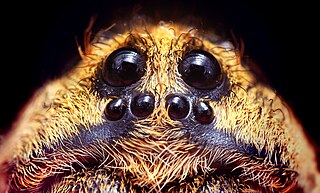
Wolf Spider?

Photo by Neil Gillies
Neil found this handsome spider in his kitchen in Baker, WV, last week.  Among the 2000 wolf spider species in the Lycosidae family, I guessed that it was among the Genus Hogna (maybe H. aspersa or H. carolinensis).

Wolf spiders are distributed nearly worldwide (except for the poles).  They are hunting spiders, and their behaviors range from waiting to stalking to actually chasing their prey.  Although they can bite, many find them favorable because they prey upon many less desirable insects and arachnids.

Among the distinguishing features of wolf spiders is that they carry their eggs, and that two of their eyes are much larger than the others, and those eyes actually reflect light!


Photo by  Opoterser on Wikimedia Commons.
In trying to identify this spider I was surprised by how much variety there is among individuals in this Genus Hogna, and I realized that wolf spiders may be a great species to demonstrate variation due to geographic isolation.

Thursday, September 6, 2012

Fall Frost Dates - Hampshire County

Our Fall frost dates for Hampshire County, WV, courtesy
of Dave's Garden:

Romney 1 Sw, WV (Hampshire county):

Temperature10%20%30%40%50%60%70%80%90%
Fall 32°Sep 29Oct 4Oct 7Oct 10Oct 12Oct 15Oct 18Oct 21Oct 25
Fall 28°Oct 12Oct 16Oct 19Oct 22Oct 25Oct 27Oct 30Nov 1Nov 6
Fall 24°Oct 15Oct 20Oct 24Oct 28Oct 31Nov 2Nov 6Nov 10Nov 16

Monday, September 3, 2012

Container Gardens

We don't have to worry about a first frost in Hampshire County for a while (only a 10% chance before October 1), but if you've been wondering about container gardening to lengthen your growing season indoors, consider this list, courtesy of the Homesteading Survivalism blog:

==================


No Garden?  Here Are 66 Things You Can Can Grow In Containers.

Tree fruits
1. Apples
2. Kumquats
3. Avocados
4. Blackberries
5. Blueberries
6. Pomegranate
7. Cherries
8. Figs
9. Pears

Citrus fruits
10. Dwarf oranges
11. Grapefruit
12. Tangerines
13. Meyer lemons
14. Limes

Tropical fruits
Tropical fruits can also be surprisingly easy to grow indoors, even in non-tropical climates. Such as…
15. Bananas
16. Pineapple
17. Papaya
18. Guavas

The real surprises
19. Hops
20. Aloe Vera
21. Strawberries
22. Tea (well, herbal tea)
23. Quinoa!

The non-surprises
24. Tomatoes
25. Summer squash
26. Other squashes, like acorn and pumpkin
27. Hot Peppers
28. Sweet peppers
29. Cucumbers

Melons
30. Small cantaloupe
31. Jenny Lind melon
32. Golden Midget Watermelon

Herbs
33. Basil
34. Oregano
35. Parsley
36. Rosemary
37. Chives
38. Catnip
39. Thyme
40. Sage
41. Parsley

Leafy Greens
42. Kale
43. Mesclun greens
44. Spinach
45. Swiss chard
46. Lettuces
47. Mustard greens
48. Collard greens
49. Arugula

Root Vegetables
50. Carrots
51. Beets
52. Potatoes

Other healthy stuff
53. Sprouts
54. More sprouts: mung bean and lentil sprouts
55. Wheatgrass
56. Kohlrabi
57. Turnips
58. Rutabagas
59. Celeriac
60. Parsnips
61. Jerusalem Artichoke
62. Sugar snap peas
63. Rhubarb
64. Mushrooms
65. Pole Beans
66. Asparagus
 

Saturday, September 1, 2012

Weather Watch

There are many strategies for predicting weather, but none has proven more useful to me than monitoring RADAR".  In the 1990's I worked on Capitol Hill representing retail agricultural suppliers, the organizations that recommended, sold, applied and troubleshooted the applications of fertilizers, pesticides, and other products on crops for farmers throughout the U.S.  Whenever I visited, there were always farmers huddled around the DTN satellite  monitor at the sales counter.  Now of course, we can do the same from any Internet connected computer and in many big cities, there are dedicated channels to local RADAR.

*RADAR is sometimes called an acronym, but technically it's only an initialism.  Acronyms are initialisms that spell actual words.

In our area, I've found the best way to plan the day is to monitor the Pittsburgh RADAR rather than Washington/Sterling's (north of Dulles Airport).  Whichever you choose, be sure to set it to loop to get the best estimate of potential weather.

http://radar.weather.gov/radar.php?product=NCR&rid=pbz&loop=yes


Friday, August 24, 2012

Trouble for the Potomac?

The Isaac storm track will probably turn abruptly to the Northeast when it hits Alabama; and that means it could travel straight up the South Branch, North Branch, Cacapon and Shenandoah watersheds.  That could provide anywhere from 3 to 6 inches of rain (or more if it slows or stalls) in each, as all three travel in that same direction.

Check for updates at
http://www.nhc.noaa.gov/refresh/graphics_at4+shtml/205536.shtml?gm_track?large#contents

Monday, July 23, 2012

Blog updates

Way out on our meander of the South Branch we're still suffering intermittent power and Internet access in particular.  The folks at Frontier are very nice and helpful, but have their hands full this month.  So, I have a backlog of images stored on Google+ (add me if you'd like) and promise to have them posted by July 29.  

Tuesday, June 12, 2012

Vegetable Garden Calendar

I found this on the Homesteading Self Sufficiency Survival Blog (don't read too much into my following that blog), but haven't determined the source.  I'm interested in whether you think it's above or below our 39th parallel.  Down here by the river at 570 feet above sea level, I consider May 1 to be frost-free, but friends on Dan's Mountain and Jersey Mountain add as much as two weeks to that.


Saturday, June 9, 2012

TinEye Reverse Image Search


As a former field biologist, friends often ask if I recognize this or that critter.  The one pictured here was new to me.  But after down;loading the photo or copying the URL, I went to tineye.com and within a minute or two I found the same picture labeled, "Blue Seaslug".  A wikipedia search confirmed it was Glaucus atlanticus.


Sunday, June 3, 2012

Nesting Turkeys


Ruth Martin stumbled onto this nest of turkey chicks at Church View Farm, near Three Churches, WV.  She was mowing a nature trail and the hen was startled when she passed by and flew away. Later, she and her husband Steve walked back to take a look and found about a dozen eggs in the nest. Last night they walked back again, the hen took off, and they heard lots of peeping. All of the eggs were hatched, and Steve and Ruth scattered too, waiting to see the whole family later in June looking for insects around the farm.


Saturday, June 2, 2012

Indigenous Roses


The Carolina Rose (Rosa carolina) is native to the Eastern U.S.  We've been spotting these along the trails just above our wetlands .  You can find it from hardiness zones 4 through 8.  The shrub (actually classified a sub-shrub) grows from 3 to 6 ft high with 2 inch pink blossoms appearing once annually in spring or summer.  The hips appear in fall-winter.

Carolina Rose (Rosa carolina)

Wednesday, May 30, 2012

Daylilies

You're probably seeing daylilies showing up in gardens and elsewhere this week.   Asiatic daylilies are in genus Hemerocallis, and are considered to be an adaptable perrenial staple for many gardeners.  I've read that they're considered by some to be invasive, and I've seen little clumps in remote places occasionally. I like them for the same reason I like the mallows: they produce a new flower almost daily (although each flower lasts for only about 24 hours).


Sunday, May 27, 2012

Bees and Poplars, Poison Ivy, and Propolis

I need some feedback from Mid-Atlantic bee experts (or specifically you folks in the Eastern Panhandle or Western Maryland).

Yesterday I recorded bees returning loaded with a very orange pollen.  My friend thought it was from poplars.  Tulip trees (Liriodendron tulipifera) are sometimes called Tulip poplar or yellow poplar by older foresters and the lumber industry, and I knew of only younger Tulip trees nearby.  Cottonwoods (Populus deltoides) are in the same genus as aspens, the true poplars in the Salicaceae family.  We have a giant cottonwood down by the river and of course, they produce seeds like no other tree, but their pollination should have been complete many weeks earlier (March or April).  You'll hear us confuse this in the video.   Now that I've done some reading, I'm guessing he was talking about tulip trees, not cottonwoods.


But the next day I was building a new horse trail / walking trail and heard a lot of buzzing.  When I went exploring I found honeybees pollinating the Poison Ivy (Toxicodendron radicans and formerly Rhus toxicodendron and Rhus radicans).  I haven't finished researching this, but I've learned some believe that the raw honey helps build a resistance to the allergic reaction from exposures to the plant oil.  Interestingly, I've also read that many people are allergic to the Cashew tree (Anacardium occidentale), in the same Anacardiaceae family as poison ivy, and that makes them more expensive to harvest.

So after further exploration, I now think the orange material these bees were transporting is propolis from the cottonwoods.  According to the well-researched Wikipedia article, propolis is believed to reinforce the structural stability of the hive, reduce vibration, make the hive more defensible by sealing alternate entrances, prevent diseases and parasites from entering the hive, inhibit bacterial growth, and prevent putrefaction within the hive.  And while bees usually carry waste out of and away from the hive, they sometimes seal larger invaders in propolis, essentially mummifying it and making it odorless and harmless.


Sunday, May 20, 2012

Red-Winged Blackbirds

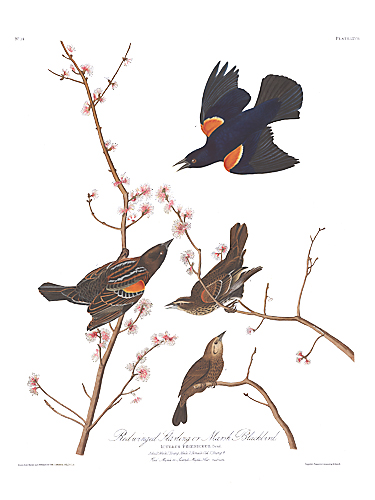
I saw the first Red-winged Blackbirds (Agelaius phoeniceus) in the lower fields today.  These birds sometimes winter as far north as Pennsylvania, but in Hampshire County they are always a signal of Summer.  The females are non-descript and resemble a very large sparrow.  In fact, I've spent an embarrissingly long time trying to determine what large sparrow I was seeing only to later realize it was a female RWB.   Of course, the males are unmistakable.  


Monday, May 7, 2012

Capturing a Swarm

The old hives are gone.

I burned our old, unused hives last week in preparation for three new nuc (for nucleus) boxes this afternoon.  Brian Umstead offered to replace my old hives because of our setting, and I welcomed the opportunity.

I've researched native pollinators and done workshops on building habitats, but I'm relatively new to honeybees.  In 2005, one of my ninth graders, almost apologetically, asked if he could build an apiary for his project even though there was no control, or independent or dependent variables.  I said, "Of course." and we talked about mentors and training classes with local beekeeping groups.  


After I left to teach at Virginia Tech, he and other students convinced the principal and the school system administrators to keep hives on the roof of the school.  I regularly use this as an example of the importance of student autonomy in project-based learning.  But beyond that, and a few lessons in harvesting honey from Steve Martin at ChurchView Farm, I don't have much  experience with honeybees.


Above:  Brian captures the swarm with sugar water.
Below:  Luring the remaining bees into the hive in the new 
location.
So just as we were finishing, Brian suggested trying to capture a swarm and installing a larger hive.   I grabbed one of the taller ladders and we drove over to Foxwalk Farm.  Brian put on a suit and climbed up with a sugar-water soaked comb to lure the bees from a cedar tree.  A couple hundred climbed on, and I swapped the comb with a fresh one.  But after a short while, it became clear that to get the swarm to come as a whole, we'd need to remove the whole end of the branch they were swarming.  I did the cutting, so I only caught some of the events on video.

We clipped the branches around the swarm and stuffed them all into a box for traveling back to our farm.  The challenge then became removing them from the branch. Eventually, we had to just knock them off, then help those inside the hive attract the rest inside.

We're concerned that we might not have much of a Black locust (Robinia pseudoacacia) bloom this year, but we have an abundance of early and late blooming raspberries, and then Osage orange (Maclura pomifera) that will hopefully keep them interested in staying.


In case you're wondering, the louder, constant hum you here in the background is not the hives, it's Diane mowing on the bigger tractor.


Sunday, May 6, 2012

Mating Wood Turtles

We see wood turtles (Glyptemys insculpta) in and just above the annual flood plain nearly every week from April to October and beyond, but this is the first time I've seen them mating.


Wednesday, April 18, 2012

Snapper


We found this very mature snapping turtle (Chelydra serpentina) near the top of the sand/silt bank to the smaller channel of the South Branch.  The back of her shell was covered with mud, but otherwise we didn't see evidence of egg-laying nearby. If this turtle was laying eggs, it would be about two to six weeks earlier than predicted. Like many reptiles, snapping turtles can store male sperm for several years, possibly because they may sense when conditions are better.  That may be giving them too much credit. If eggs are incubated from 75-80 F (24-26 C), they are nearly always male; but if the surrounding environment is significantly cooler (20 C) or warmer (30 C), they're nearly always female.

Last year we found a snapping turtle that seemed to be struggling up a steep slope.  I've been handling these turtles comfortably since I was a pup, so I lifted it to the top of the steep slope, immediately discovering that it had just deposited about 12 ping-pong sized eggs.  I tried to put her back, but she wanted nothing to do with the nest.  I felt terrible whenever I thought of it, even though I really don't want a bunch of snapping turtles in our ponds.

Monday, April 16, 2012

Spotted Salamanders

After the last big flood, someone must have decided it was easier to bury flood debris rather than remove it.  I'm told FEMA flood insurance often prescribes that, and some floodplain owners have had to watch dozers bury entire trailers in their lower fields rather than pay for big trucks to remove them.   But there is an upside.  It seems that one of every three or four times I discover buried debris, I find big spotted salamanders (Ambystoma maculatum) using it as an underground cavity.  I first learned of these when a good friend and biology major in college had one as a pet, because her father studied the ability of newts and salamanders to regenerate their eyes at the University of Pennsylvania back in the 1980's.

Sunday, April 15, 2012

It's Invasive Time! (Already)

Our interns Jamie and Mary pulled lots of invasive cattails (Typha spp.) from the wetland frog pond last year, but they're back.  I can't remember ever seeing new shoots this early in April.   I got a few by the roots, but I'll bet at least two dozen broke off, leaving the rhizome beneath the surface.  I've never done it, but you can grind the rhizomes to make a flour, and eat other parts too.

Thursday, March 29, 2012

An unusual wind map

I was awakened by the wind, so I thought I'd share this unusual wind map. Click on the image below to see the dynamic version.

Wednesday, March 14, 2012

Chestnut leaves!

American chestnut leaves on March 14, 2012
I keep a few little American chestnuts (Castanea dentata) growing in pots for school visits and other demonstrations.  After two 80-degree days this week, I noticed today that one of the little chestnuts had leaves!

Trees in pots are more influenced by ambient temperatures.  The temperature extremes in regular soil are buffered, whereas potted soil can be warmed almost uniformly.  So, for the same reason that potted plants' roots are vulnerable to extreme cold, this little tree's leaves emerged as a response to warming, presumably triggered by a drop in abscisic acid and a corresponding increase in gibberellin levels.

Saturday, March 3, 2012

Experiments in Spring Flooding

February 26, 2012
By inserting a modest weir and natural rocks in our smaller channel (lower left of top photo) before anticipated minor flooding, we hoped to reverse slow erosion and instead foster sediment deposit so we can add willow stakes and silver maple and sycamore seedlings.

The idea is to slow, stall or gently reverse the flow along the area vulnerable to erosion.  Before we began work, the channel-left bank (river-left or channel-left is always from the perspective of someone traveling downstream, so that means the bank on the right from the cameras perspective in these photos) had a five foot to eight-foot dropoff.

In the second photo you can see the swift flow in the center channel, with pooled water in the area of concern.

I'll share "after" photos when the water recedes.


Sunday, February 26, 2012

First sightings - Robins, Narcissus and Bluebirds

American Robin Bill Purcell.  Next.fronteraaudubon.org
I travel between Zones 6b and 7a several times a week, so I can often predict what's coming for Hampshire County at least one week in advance.

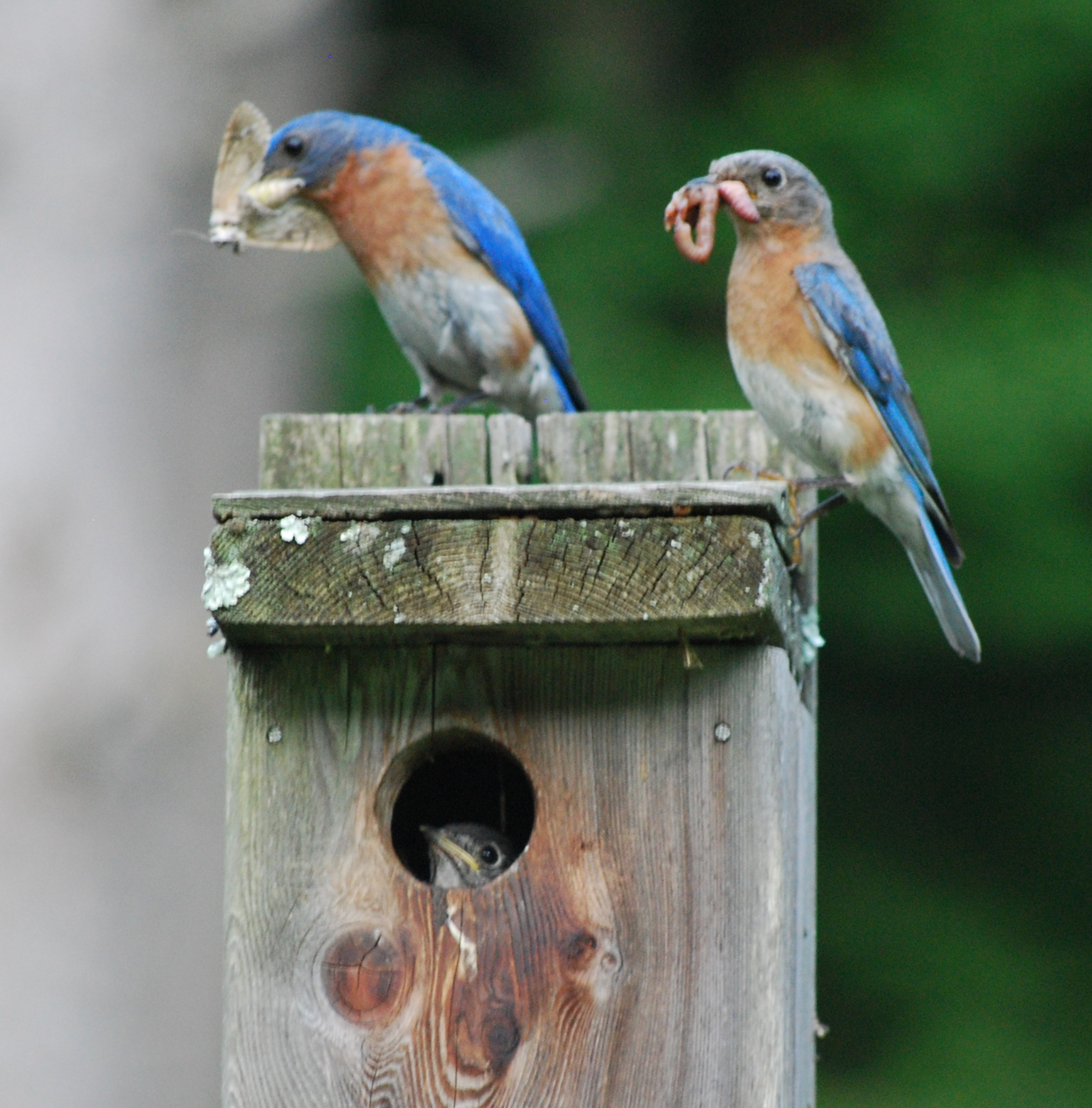
Last week I saw  American Robins (Turdus migratorius) and Daffodils (Narcissus spp.) in the city.  On a long walk on Saturday in Hampshire County I saw the first robin, many daffodil leaves, and another member of the thrush family, Eastern Bluebirds (Sialia sialis).  


This morning along the South Branch, there were robins and bluebirds everywhere.


Daffodils - February, 2012


Eastern Bluebird parents. Paula Apro of Eastford CT. 

Tuesday, February 7, 2012

First Crocuses

Shoots from bulbs are triggered almost entirely by sustained increase in temperature of the surrounding soil.  So in mild winters like this one, it's likely they will appear earlier this Spring.  We saw daffodil shoots (Narcissus sp.) over the weekend, and we saw our first crocus blooms (Crocus sp.) this morning.


Crocus is a genus of perennials in the iris family with about 80 species. Crocuses are native to Europe, the Middle East and Central Asia, and south to North Africa.  They are successful at nearly all altitudes, and that's one reason why they do well in the mid-Atlantic.

You've probably seen photos of crocuses blooming in the snow, and it sounds like we'll get the chance to see that tomorrow.

Monday, January 9, 2012

Frosty Mornings

First light on a frosty morning.
Diane and the dogs crossing the big field.

My oldest dog Korry stops back to check on why I'm kneeling.
Most people in the mid-Atlantic region will tell you that witnessing the change of season is important to them.  Of course, that's an underlying theme of this blog.  Based on my current understanding of others' interpretations of climate change data, we may have an increasingly warmer climate, but that will likely be experienced through irregular weather patterns, more snow rather than less, and increases in both flooding and drought.

As an educator, I also align more with those who are putting their energy into climate adaptation, rather than what may or may not be possible in reversing climate trends, which may be entirely due to anthropogenic causes.      I don't look forward to droughts or floods, but I certainly look forward to more snow.  I'm surprised we're still seeing temperature swings in January of 30 oF or more.

But for now it seems will have to settle for frosty and foggy mornings rather than snow.  

Tuesday, January 3, 2012

Eagles in the City

I was commenting that it has been more than three weeks since we've seen a Bald Eagle (Haliaeetus leucocephalus) along the South Branch.  Then today I received an email from my neighbor Greg in the Clarendon neighborhood of Arlington, VA (most densely populated county in the U.S.) that there was an eagle in his tree, and our neighbor Joan got these two great photos.


Best of all, there is good reason to believe the eagle may have been surveying Greg's flock of plastic flamingos, although I wish it would pick off some of the neighbor's free-roaming cats.   What might this mean for the Arlington Egg / Backyard Hen Initiative?  I learned there was another eagle spotted above the Arlington Career Center last month.

Saturday, December 24, 2011

American (Common) Merganser

Mergansers in flight
Source: U.S. Fish and Wildlife Service 

Today was the first time we've seen Common Mergansers (Mergus merganser americanus), the american subspecies of the merganser known as the Goosander (M. m. merganser Linnaeus) in Europe.  These diving ducks always seem to appear just after we notice the South Branch of the Potomac has turned that familiar shade of winter green.


Mergansers have serrated bills, and like other diving ducks, their legs are positioned further back along their body.  This facilitates diving but also requires a running start to get up and out of the water.  They fish cooperatively and have a lot of other behaviors similar to cormorants, but they also nest in tree cavities.  I think of cormorants as among our most primitive birds, so it's interesting to consider these beautiful mergansers as modern semi-aquatic flying reptiles.

Be sure to use the database link in the upper right corner of this blog page to report what you're seeing.

Sunday, December 11, 2011

South Branch Reached Action Level

I'm having difficulty determining just how much rainfall we received last week.  Our own South Branch Science Consortium Weather Station doesn't archive readings online, and with the Oldtown Bridge flooded, I didn't take the time to go to the Wood House from Romney and back on Thursday night.  I went to Romney for the watershed meeting hosted by Melissa Merritt for WVCA, but had to get back to Washington, D.C for meetings the next morning, and I couldn't afford the extra 90 minutes to get the data from the supporting laptop there.

My wife takes our more primitive rain gauges inside for the winter so the ice doesn't destroy them.  I'm a little suspicious of my annual accumulations too, as I've registered less than 30 inches this year, and I'll bet it's the wettest of the seven years I've been in Hampshire.

Every stream I passed from Goose Creek to the North River was significantly swollen, so I wasn't surprised by the spike on the South Branch at Springfield.

Tuesday, December 6, 2011

South Branch flooding, fresh tracks

(Click the photo to enlarge)

We always look forward to walking the beaches of the South Branch of the Potomac after the water recedes.  We have a particular spot where we always find a fresh collection of mammalian, avian and reptilian tracks.

If you recognize any tracks in this photo, post a comment.  Some of the tracks are from our German short-haired  pointers, who always beat us to the river on our walks.

Sunday, December 4, 2011

Deer Management

This is the last week of deer season in Hampshire County until the brief winter private-property season at the end of December.  I've estimated between 40-55 deer per square mile around our area in northern Hampshire County.

Piebald white-tailed deer at Patuxent Wildlife Research Ctr.
Many deer management plans aim to reduce that population to under 20 deer per square mile.  Some metropolitan areas suffer from whitetailed populations over 100/mile2!

We're surrounded by the river on three sides and mountains on all four sides, so we have less immigration/emigration than most places.  As a result, we occasionally see evidence of a shrinking gene pool like unusual antlers and piebald deer.  Of course we also see a lot of tree damage.


This also suggests greater vulnerability to disease.  Not only do greater deer densities mean more interaction and the potential for spreading disease, but a reduced gene pool can also mean lesser resistance to all environmental challenges.


Venison Pizza


Hunting remains the best available option, particularly if you can convince hunters to harvest does.  I've lost enough young trees to antler rubs to appreciate harvest the bucks too, but harvesting a recently impregnated doe is much better for population management. 

My schedule this semester has been too busy to squeeze in any hunting, but my co-worker Shari brought in some ground venison this week.  I used over 1/2 pound, mixed with jalapeno peppers, on a single pizza. 

Friday, November 18, 2011

Ailanthus Fungus?

This is the first time I have ever seen a fungus growing on a living Ailanthus tree (Ailanthus altissima, Tree of Heaven).  I know we'd all love to see a natural attacker of these trees, but we could also expect that whatever killed a nearly invincible Ailanthus tree would likely be devastating to many other species.

I don't yet know what this fungus is, but it didn't take much research to discover there are several fungi and diseases of Ailanthus.  Joanne Rebbeck, of the U.S.Forest Service Northern Research Station in OH describes Verticillium wilt,  caused by Verticillium albo-atrum.  It was first detected in Pennsyvlania in 2002, and is caused by a soil-fungus that infects the vascular tissues of Ailanthus trees. She reports the infected trees die rapidly, typically within a growing season, and that it shows promise as a potential biological control agent of Ailanthus!  Unfortunately, Virginia Cooperative extension reports other vulnerable trees include, but are not limited to, maple, redbud, quince, ash, sassafras and slippery elm.  A few species have demonstrated resistance, including fir, hackberry, dogwood, fig, beech, sycamore, white oak and willow.  Read more here.


On the BugwoodWiki, I found lists of 32 arthropods and 13 fungi that are associated with the genus Ailanthus in China. The fungal species directly associated only with A. altissima include Phyllactinia ailanthi, Cercospora glandulosa, Phyllosticta ailanthi, and Pseudocercospora ailanthicola, Alternaria ailanthi, Aecidium ailanthi, and one unidentified Coleosporium species.

An article by Peter Feret in the Journal of Arboriculture mentions there are six species of fungi that attack
the foliage, and ten that attack the stem and vascular system, with another five species of decay fungi that have
been found in Ailanthus roots and rotting trunks.


Saturday, November 12, 2011

Big Sycamores

 
American sycamore, Green Spring / Levels, WV
Hampshire County is loaded with big sycamore trees (Platanus occidentalis).  Even small sycamores seem to have unusually large leaves, but even after many years we sometimes find leaves that are still impressive.  Of course, big green leaves mean there's more chlorophyll by which to convert sunlight to carbohydrates that make these trees grow fast and large.  So like most things in nature, their are both obvious and not so obvious correlations and causation among observable phenomena.


Frost in the shaded spots

As we walked along our normal trails through and around the wetlands we could see the effect of the sunlight on the frost, even though it was still below 0 C.


Monday, November 7, 2011

Moving indoors

We live in a house constructed from three, 100-year old barns. The design was based on a children's book by Wolo, in which a squirrel escaped a forest fire by jumping on a log and floating down the river to a home inside a tree, where it lived with a variety of other animals.

The Wood House was also designed to be a green home, built so that you could heat it with a candle.  The architect brags about this in his displays at the big Green Festival in Washington, D.C. each year.  I can't even heat it completely with our fancy catalytic re-burner Vermont Castings wood stove.

I don't need an infrared monitor or camera to prove there are gaps and leaks in which air escapes or gets in.  Instead, simply studying the number of critters that make their home in my home tells me all I need to know.  Especially this time of year, we've found plenty of Deer mice (Peromyscus maniculatus) and their close relatives, the White-footed mice (Peromyscus leucopus).  We've also found several flying squirrels (Glaucomys volans).

But we also find Black rat snakes (or "Black snakes", Pantherophis obsoletus), our largest snake in most of the mid-Atlantic.  To the horror of our wonderful house keeper, we find them as often as every two months, sometimes sitting in the middle of the kitchen floor!

I found this young black snake right inside the door.  You'll notice how distinct its pattern is, and you can also see that it had probably never been threatened before, and therefore very comfortable being handled by me.