Saturday, May 14, 2011

Edible Plants Talk

I knew of Leenie Hobbie through mutual friends on Facebook, but I had a chance to listen in on her edible plants talk when my neighbor hosted a "Yoga and Weeds" event at Foxwalk Farm.  I wandered toward the barn, which has a large art studio above the stables, hoping  to have missed the yoga.  I was a little late for the edible plants introduction, but I was pleasantly surprised to learn just how much of the abundant local fauna was indeed edible.  Leenie often mentioned plants that were valued as liver "tonics" or kidney tonics.

In my recent post on Garlic Mustard I mentioned that I like my medicines and their dosages clinically tested.  But I also took a chemical ecology course in graduate school in which the overriding theme was that even when chemicals can be synthesized in the lab, it's rarely more efficient than harvesting the chemicals from their natural sources.  Moreover, having a command of natural medicine can save lives in extraordinary situations where modern medicine is unavailable.  So I paid attention, but I'm not going to get into the business (or liabilities) of listing such things here regularly.

When I returned home I noticed all of the irises next to the boathouse were in bloom.
Irises in bloom along the boathouse driveway.     

Sunday, May 8, 2011

Blooming Irises

Normally we see about a week between when the tulip bulbs self destruct and the Irises.  The Genus Iris has over 250 species, but the "type" is Iris germanica.  We have several hundred of them, and they multiply nicely from rhizomes.  
Irises along the smaller turtle pond.
I like them around our Hampshire farm because deer don't seem to try them even once (they're mildly toxic) and our deer will eat right out of the planter boxes on our front patio. They seem to bloom in the first week of May each year in Hampshire County, although the leaves sometimes begin emerging as early as late March.  When we divide them in the Fall I 'll plant a few dozen throughout the farm in surprise places, usually forgetting about them until the greenery becomes noticeable in mid-April.


Our sunnier wetlands (left) are still flooded, and I see that the Silver Maple (Acer saccharinum) seeds we spread casually have germinated and thrived.  The wood ducks and frogs seem to prefer the more protected woodland wetlands, and the predatory herons seem to avoid them, so I'm happy to encourage a few Silver Maples, Sycamores (Platanus occidentalis) and River Birches (Betula nigra) in the two smaller, more open ponds.


A female Wood Turtle travelling along our walking trails.
We do leave spots for the Wood Turtles (Glyptemys insculpta).  Our adult turtles seem to be thriving, but we haven't found any youg wood turtles yet this year.  Unlike Box turtles, which close up and park themselves at any sign of danger, the wood turtles will move out of the way.  Hitting a turtle with a mower is a sickening feeling, and fortunately it's only happened once (a Box Turtle).   We made a decision two years ago to mow all the trails along the ponds, creeks and the river  with the mower at it's 4-inch setting, easily high enough to miss a Wood Turtle.

Friday, May 6, 2011

Garlic Mustard and new Swamp White Oaks

I still have not pinned down a date for when Garlic Mustard (Alliaria petiolata) first appears.
Garlic Mustard near the old Blue Ford river crossing

The leaves, flowers and fruits are apparently edible, providing a flavor of both garlic and mustard. I've read that it induces swaeting and is helpful for respiratory problems, ulcers and gangrine.  You won't get such recommendations from me - I like my medicines and their dosages clinically tested.  But like many other invasive plants, I do wish someone would declare them to be aphrodisiacs or an ingredient of eternal youth, because trying to clear a woodlot of Garlic Mustard is tiring and boring.  And you need to do it completely for five years in a row to exhaust the seed bank.

Later I'll post a photo of a mature plant with seeds.  They're actually very easy to pull, as the roots come right out without any special pulling technique.  If seeds are present, you'll need to remove them from the woods.  I burn them, although I've read that some believe composting heat kills the seeds of many weeds.

Here's a photo (left) of a remarkably resilient Flowering Dogwood (Cornus florida) that was able to leaf out and flower even with bird and presumably insect damage to its bark on a broken branch hanging straight down.


The photo below shows a few Swamp White Oaks (Quercus bicolor) germinated from acorns stored haphazardly over the winter.
Diane's successful Swamp White Oak germination.

Sunday, April 24, 2011

American Chestnut Leaves

We've grown many dozens of American Chestnuts and back-crossed Chestnuts over the last 5 years.  We keep a few in large pots in the city for school demonstrations, but most were planted as seeds in Hampshire County.  The trees in Arlington leaf out about 7-10 days earlier than the Hampshire County trees. This photo was taken today.  In my studies of tree phenology, I believe that's largely a function of soil temperature, and I've wondered about the variability of temperature in the potted trees' soil.  Someday I'll stick a thermochron in there.

We also found this plant last week, and then this week we saw that it was flowering. Anyone have a tip?

Friday, April 22, 2011

Gallinule Chick

source:www.birdsandsuch.com/pages/gallinules.html  
With the flooding in our lower field, we've been on the lookout for emerging water plants from the floodplain's seedbank.  Yesterday we got a big surprise when a young gallinule ran out in front of me then feebly flew 20 meters away.  I called to my wife, but that also alerted our two old kurzhaars.  Our older dog (14) won't hold a point if an animal moves, so I didn't want her to spot it while I was trying to photograph it.

I borrowed this photo from www.birdsandsuch.com, but the bird I saw was much more rufous and with a red-yellow, adult-colored beak.  These birds and others often reflect high ferrous mineral content, and are wetland soils are loaded.  Except for a purple gallinule or moorhen, I can't think of another bird with this immature body shape, a brightly colored beak and long legs than would be wading around in 4 inches of watery grasses.

Tuesday, March 29, 2011

What to Plant Outdoors This Week

(5 weeks before the last frost*)

Seeds
You may have already planted seeds for peas and spinach outdoors, if the soil was workable, and maybe carrots, beets, lettuce, green onions and parsnip seeds.  

It also pretty safe to plant chard, kale, endive and kohlrabi seeds.

Plantings
You also might have already planted asparagus crowns and horseradish crowns or roots. Onion sets or hardened-off onion or leek transplants can also be planted in the garden.

This is also the week to start potatoes.


*  I like to use Dave's Garden website for calculating freeze/frost
    dates. They predict the following for us here in the Green
    Spring/Levels areas:
  • Each winter, on average, our risk of frost is from October 12 through May 4.
  • Almost certainly, however, we will receive frost from October 25 through April 18.
  • We are almost guaranteed that we will not get frost from May 19 through September 29.
  • Our frost-free growing season is around 161 days.
Our friends Steve and Ruth at Church View Farm near Three Churches use May 1.

Sunday, March 27, 2011

Crocuses and Daffodils

We woke to a covering of snow this morning, after a little more than a week or 10 days of crocuses and daffodils blooming.


Sunday, March 13, 2011

Capturing April Showers

I bought these old wine barrels a long time ago, and finally installed them this weekend. We've not yet connected the distribution and overflow hoses, but we've now got a downspout in both front and back yards draining into barrels. Our other two dounspouts drain into an underground basin in the flower bed next to the driveway.


Sunday, March 6, 2011

Back-Crossed American Chestnuts

We've got about 40 American chestnuts (Castanea dentata) on our farm, all grown from seeds. At least 20 are third-generation back-crosses with Chinese chestnuts (Castanea mollissima)
to develop resistance to a fungal infection called blight. Specifically, the blight is caused by an Asian bark fungus (Cryphonectria parasitica, formerly Endothia parasitica) accidentally introduced into North America on imported Asiatic chestnut trees in the Bronx Zoo in 1904.


In these photos, Diane is looking at the Spring buds. Among our varieties, the bark and buds are distinctly different between the two BC3 back-crosses we've planted (Hahn x OpAm and Cain x OpAm). The Hahn trees are faster growing with many Chinese qualities.

You can view the slides from a presentation I made for the Growing Native Program administered by the Chesapeake Bay Foundation and now the Potomac Conservancy.

Thursday, March 3, 2011

Pruning River Birches

We don't like to prune River birches (Betula nigra), ever. We've got an 18-panel, 4.2 kW, grid-tied PV solar system, and in the summer, our very large river birch blocks it, reducing its capacity by almost 40%. We decided to remove one of the four main stems, and we followed conventional wisdom, making the cut in late January. Because the limb hung over multiple phone and power lines, we hired a tree service to remove the limb with their boom truck. Admittedly, there was no natural collar that was evident, but I was immediately concerned that the remaining stem was too long.

I had only my small 14" arborist saw in the truck and decided to fix it when I had my big saw with me. I also wanted to use a taller ladder than what I had on hand, because i didn't want to accidentally damage the adjacent trunk. Unfortunately it warmed up right away, and we missed those next to weekends at the farm. I should have found a way to do it with the small saw. As we watch the sap free-flow from the cut, we're crossing fingers hoping the tree will continue to thrive.

Normally the beginning of meteorological Spring is a time full of optimism. I don't think I'll be content until I see this tree leaf out in April.

Sunday, February 27, 2011

Waiting for the frogs to sing

As it warms, our wetland vernal ponds are still holding a lot of water, and the surrounding moist and mesic-moist soil is thoroughly saturated.

Wood frogs (Rana sylvatica) will be the first to begin singing, and they will begin breeding with the first warm rain, sometimes while there is still ice on the ponds. Most interesting, they are found further north than any other North American reptile or Amphibian.
Photo by Karen Fancl 

Saturday, February 26, 2011

Winter flooding

A few brave folks drove through 8-10 inches of water moving across the top of the West Virginia side of the Oldtown Bridge.
I had a trailer in tow, and we had been thinking of making a trip to Cumberland, so we wimped out, stopped by Nature's Art in Cumberland to buy an indoor lime tree, and then drove down Route 28 through Ridgely, Fort Ashby, Springfield and then back north to Green Spring.

Monday, February 21, 2011

Cherry tree

Back in the city, my neighbor Joanne had a very large ornamental cherry tree that had succumbed to the burden of winter snow, after years of struggling with invasive English ivy. I offered to trim the dead branches, and she accepted, but then told me she was planning to pay to have the whole struggling tree removed. I summoned my neighbor Doug, who I new would love the wood for the custom canoe and kayak paddles he builds, and we promised to save her a few hundred dollars by taking care of it during the three-day weekend.

Only after cleaning up did we realize we cut down a cherry tree on Washington's Birthday. While the account of George Washington's story is debated among historians, we didn't know what to think about this, but we thought we could at least pose for a photo.

Sunday, February 13, 2011

Taking advantage of the end of Winter

The occasional warm days hint bring a little optism. But I'll confess that some things are easier in Winter. Here we've loaded 95 gallons (about 650 pounds)of coffee grounds from the Java Shack in Arlington and Open Kitchen in Falls Church into the T190.

Sometimes we apply the coffee grounds immediately to the soil to provide some acidity, mostly for berry crops or transplanted plants from the Ericaceae family (blueberries, cranberries, rhododendron and laurel).

Otherwise it's beneficial to compost the coffee grounds. We like to create a mix of leaves (90% by volume), coffee grounds (5%), and woodstove ashes (5%) to maximize the nutrient availability in the mature compost.

Sunday, February 6, 2011

Pre-Vernal Ponds

Our turtle, frog and Wood Duck ponds were pretty low all winter, but we've been glad to see nearly all of them at full capacity this week. This will ensure the best conditions for wood frogs and peepers in early March.

Before we bought our farm, the wetlands were drained by dredging the original intermittent stream to create a narrow channel. The creek boundaries may have been ambiguous after the extensive flooding in 1996, but by creating a channel, a lot of wonderful wetland habitat was no longer available. We merely created stream crossings with 6-inch flow-through pipe and 90o ends that can be rotated to allow for variable depths. We can raise the water level by up to 8".


As many of you know, we didn't have to plant a single wetland plant; they immediately appeared from the existing seed bank.

Thursday, January 6, 2011

Geocaching in Hampshire County

Geocaching is like treasure hunting, although most participate because of the spirit of the hunt rather than the treasure itself.


We have more than a hundred geocaches within a 30 mile radius of Romney, as you can see below. Clicking the link will take you to Geocaching.com


In the northern part of Hampshire County, we have several caches that are accessible only by paddling or tubing along the South Branch.


In the photo below, my nephew Elliot is securing an easy-to-find cache near the river bank.

Tuesday, October 26, 2010

Honeylocust

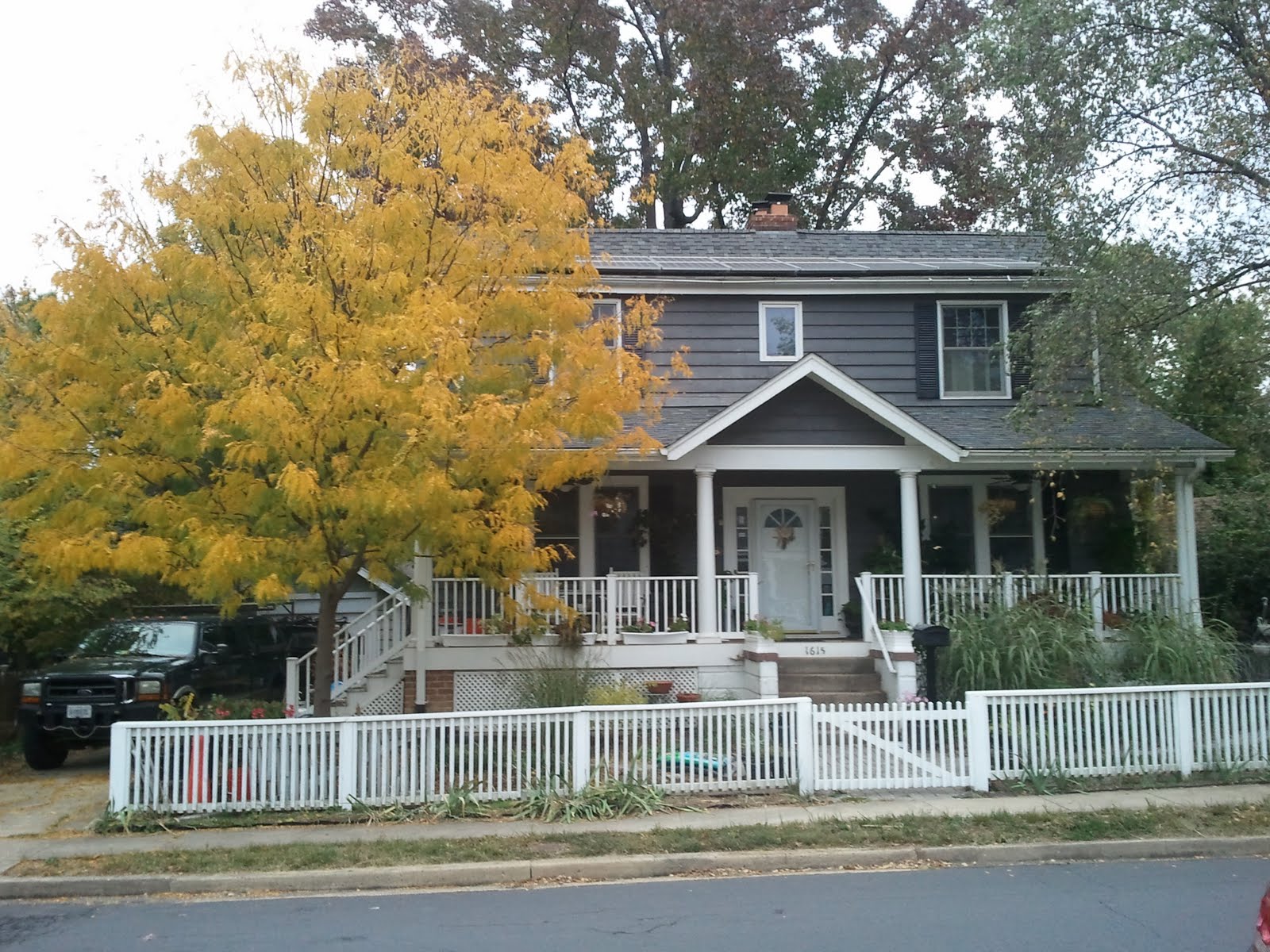
I've written before that the Honeylocust (Gleditsia triacanthos) is one of my very favorite trees. Our honeylocust in the city is always remarkable on mid-October.


In this second photo, you can also see our new solar panels. We're planning a large solar array in northern Hampshire County during 2012.

Thursday, October 14, 2010

A Surviving American Chestnut

A friend took me to see this American chestnut, barely surving in a ridge overlooking the South Branch. We collected leaves and sent them to Penn State for DNA analysis, which confirmed it was the original species.

Wednesday, October 6, 2010

Too Dry

In the Winter and Spring, this path through the wetlands would be bordered by water on both sides - standing water on the right and moving water on the left. This October, there's no water visible in either.

Dangerously dry

The cows are managing to find food despite less than ideal moisture available to grass. Unfortunately, weeds and invasives have an advantage in these conditions.