Tuesday, October 30, 2012

River Level Predictions (updated 10/30 10:15am)

NOAA 72 hour, river level predictions are understandably and necessarily conservative.  As an example, our road floods at around eight feet, so I appreciate knowing about the possibilities in advance.  NOAA also publishes the likelihood of specific river levels based on historical modeling, if you want to decide for yourself.

So I'm doing an experiment here.  I'm publishing static images of the gauge prediction (hydrograph) throughout the storm, and then also publishing the automatically updated version of the hydrograph at the bottom of this post.

The Satuday, 10/27 prediction for Tuesday at 7am, copied at 7pm, Saturday, 10/27/2012:

Snapshot Saturday, 10/27/2012, 7pm

Here is another forecast, almost 41 hours later (Monday at 1:15pm) than the one above:


A significantly reduced threat - 10am on Tuesday (10:15am)


The live (automatically updated) image for the same gauge:
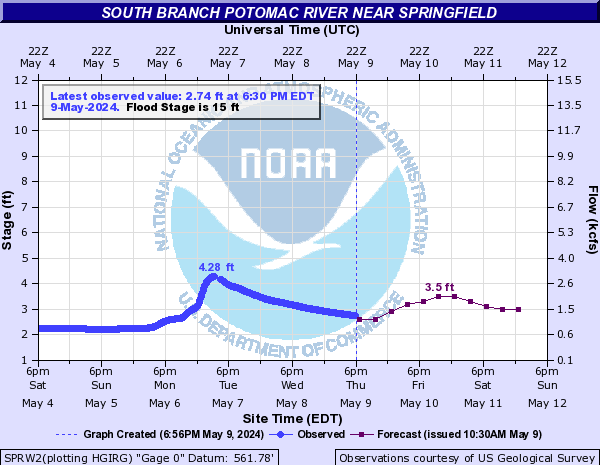
Automatically update image.

Monday, October 29, 2012

NASA Super Rapid Scan Video

This is from the NASA Earth Observatory YouTube Channel.  There's lots of great Hurricane Sandy video there.

Sunday, October 28, 2012

Construction Progress

We've nearly enclosed our new 60x36 shop, garage, and future teacher-training center along the South Branch.


Saturday, October 27, 2012

This is going to be bad.

This rainfall projections continue to evolve.  At 5:30am, the entire West Virginia portion of South Branch watershed (everything downstream of Bluegrass, Virginia) was within the 6" rainfall zone.  (Click to enlarge and check the lower left corner for the last update.)
http://www.hpc.ncep.noaa.gov/qpf/zoom/Rainfall_Days_1-5.gif

Wednesday, October 24, 2012

Alternative Agriculture

We have lots of inexpensive land in Hampshire County, and you can still find larger tracts of land for under $5000/acre.  But just 100 miles east, there are several places where land sells for over $5 million an acre, or closer to $8 million per acre in commercial districts.  People there are exploring alternative agriculture practices that could be replicated in backyards, porches, or even rooftops, just about anywhere.   In this video clip, you'll see an Oakland, California man has developed small-scale, high output practices with very low impact on the environment.

Friday, October 19, 2012

Saturday, October 13, 2012

Frosty morning in Hampshire Co.?

Our temperatures fell to just below freezing along the river here in Green Spring, WV, but because we're down here at 600', surrounded by mountains on four sides and the river on three sides, we did not have a frost.  However, our friends up on Jersey Mountain, including Steve and Ruth at Church View Farm, apparently received a heavy frost.  Tell us where you are and whether you were frosted this morning.


Yes, I know the "North Fork South Branch Potomac River" label on the Google map above is wrong.  We've reported it.

Friday, October 5, 2012

From Meanders to Mitigation: FEMA Flood Maps

From Lauren's Meanders to Mitigation blog: FEMA Flood Maps:

If anyone is interested in learning about floodplains and how that information is used for flooding mitigation, flood zone delineation, and building requirements, here is a link to the Map Service Center. Let me know if you have any questions about using the site!

Monday, October 1, 2012

Fall and Winter Gardening


Shared by the Homesteading Survival Blog:  Free for Kindle right now. Fall and Winter Gardening: 25 Organic Vegetables to Plant and Grow for Late Season Food


Fall and Winter Gardening: 25 Organic Vegetables to Plant and Grow for Late Season Food

Wednesday, September 26, 2012

National Take-Back Prescription Medicine Initiative


September 29, 2012 (10:00 AM - 2:00 PM) 

The Drug Enforcement Administration (DEA) has scheduled a way to safely dispose of unwanted, unused prescription medications.  At the last event, on April 28, 2012, citizens turned in 276 tons of unwanted or expired medications for safe and proper disposal at the 5,659 take-back sites that were available in all 50 states and U.S. territories. When the results of the four Take-Back Days to date are combined, the DEA and its state, local, and tribal law-enforcement and community partners have removed over 1.5 million pounds (774 tons) of medication from circulation. For more information, see http://www.deadiversion.usdoj.gov/drug_disposal/takeback/index.html or call 1-800-882-9539.


Prescription drugs are one possible source of intersex, or reproductive endocrine disruption in smallmouth bass (Micropterus dolomieu) in the Potomac River basin.

Tuesday, September 18, 2012

Project Budburst

Fall into Phenology With Project BudBurst!
September 10 - October 31, 2012
Fall into phenology
Mark your calendars for Sept 10th to Oct 31st and share your fall observations of plants changing color, shedding leaves, and more during the 2012 Fall into Phenology campaign.

Project BudBurst was delighted that so many citizen scientists participated in 2011, resulting in many more reported plant observations than have been reported during past fall seasons. Thank you for making our first seasonal campaign a success! We hope you'll participate again this year and make the 2nd annual Fall into Phenology campaign even more successful than the first.  Learn more atbudburst.org/fall


Of course, we're always accepting your observations of plants and animals.  Click on the "Report what you're seeing" link at  tiny.cc/hampshireoutdoors.

Monday, September 17, 2012

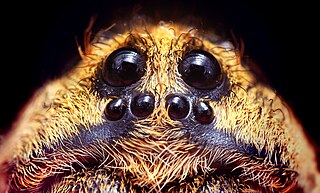
Wolf Spider?

Photo by Neil Gillies
Neil found this handsome spider in his kitchen in Baker, WV, last week.  Among the 2000 wolf spider species in the Lycosidae family, I guessed that it was among the Genus Hogna (maybe H. aspersa or H. carolinensis).

Wolf spiders are distributed nearly worldwide (except for the poles).  They are hunting spiders, and their behaviors range from waiting to stalking to actually chasing their prey.  Although they can bite, many find them favorable because they prey upon many less desirable insects and arachnids.

Among the distinguishing features of wolf spiders is that they carry their eggs, and that two of their eyes are much larger than the others, and those eyes actually reflect light!


Photo by  Opoterser on Wikimedia Commons.
In trying to identify this spider I was surprised by how much variety there is among individuals in this Genus Hogna, and I realized that wolf spiders may be a great species to demonstrate variation due to geographic isolation.

Thursday, September 6, 2012

Fall Frost Dates - Hampshire County

Our Fall frost dates for Hampshire County, WV, courtesy
of Dave's Garden:

Romney 1 Sw, WV (Hampshire county):

Temperature10%20%30%40%50%60%70%80%90%
Fall 32°Sep 29Oct 4Oct 7Oct 10Oct 12Oct 15Oct 18Oct 21Oct 25
Fall 28°Oct 12Oct 16Oct 19Oct 22Oct 25Oct 27Oct 30Nov 1Nov 6
Fall 24°Oct 15Oct 20Oct 24Oct 28Oct 31Nov 2Nov 6Nov 10Nov 16

Monday, September 3, 2012

Container Gardens

We don't have to worry about a first frost in Hampshire County for a while (only a 10% chance before October 1), but if you've been wondering about container gardening to lengthen your growing season indoors, consider this list, courtesy of the Homesteading Survivalism blog:

==================


No Garden?  Here Are 66 Things You Can Can Grow In Containers.

Tree fruits
1. Apples
2. Kumquats
3. Avocados
4. Blackberries
5. Blueberries
6. Pomegranate
7. Cherries
8. Figs
9. Pears

Citrus fruits
10. Dwarf oranges
11. Grapefruit
12. Tangerines
13. Meyer lemons
14. Limes

Tropical fruits
Tropical fruits can also be surprisingly easy to grow indoors, even in non-tropical climates. Such as…
15. Bananas
16. Pineapple
17. Papaya
18. Guavas

The real surprises
19. Hops
20. Aloe Vera
21. Strawberries
22. Tea (well, herbal tea)
23. Quinoa!

The non-surprises
24. Tomatoes
25. Summer squash
26. Other squashes, like acorn and pumpkin
27. Hot Peppers
28. Sweet peppers
29. Cucumbers

Melons
30. Small cantaloupe
31. Jenny Lind melon
32. Golden Midget Watermelon

Herbs
33. Basil
34. Oregano
35. Parsley
36. Rosemary
37. Chives
38. Catnip
39. Thyme
40. Sage
41. Parsley

Leafy Greens
42. Kale
43. Mesclun greens
44. Spinach
45. Swiss chard
46. Lettuces
47. Mustard greens
48. Collard greens
49. Arugula

Root Vegetables
50. Carrots
51. Beets
52. Potatoes

Other healthy stuff
53. Sprouts
54. More sprouts: mung bean and lentil sprouts
55. Wheatgrass
56. Kohlrabi
57. Turnips
58. Rutabagas
59. Celeriac
60. Parsnips
61. Jerusalem Artichoke
62. Sugar snap peas
63. Rhubarb
64. Mushrooms
65. Pole Beans
66. Asparagus
 

Saturday, September 1, 2012

Weather Watch

There are many strategies for predicting weather, but none has proven more useful to me than monitoring RADAR".  In the 1990's I worked on Capitol Hill representing retail agricultural suppliers, the organizations that recommended, sold, applied and troubleshooted the applications of fertilizers, pesticides, and other products on crops for farmers throughout the U.S.  Whenever I visited, there were always farmers huddled around the DTN satellite  monitor at the sales counter.  Now of course, we can do the same from any Internet connected computer and in many big cities, there are dedicated channels to local RADAR.

*RADAR is sometimes called an acronym, but technically it's only an initialism.  Acronyms are initialisms that spell actual words.

In our area, I've found the best way to plan the day is to monitor the Pittsburgh RADAR rather than Washington/Sterling's (north of Dulles Airport).  Whichever you choose, be sure to set it to loop to get the best estimate of potential weather.

http://radar.weather.gov/radar.php?product=NCR&rid=pbz&loop=yes


Friday, August 24, 2012

Trouble for the Potomac?

The Isaac storm track will probably turn abruptly to the Northeast when it hits Alabama; and that means it could travel straight up the South Branch, North Branch, Cacapon and Shenandoah watersheds.  That could provide anywhere from 3 to 6 inches of rain (or more if it slows or stalls) in each, as all three travel in that same direction.

Check for updates at
http://www.nhc.noaa.gov/refresh/graphics_at4+shtml/205536.shtml?gm_track?large#contents

Monday, July 23, 2012

Blog updates

Way out on our meander of the South Branch we're still suffering intermittent power and Internet access in particular.  The folks at Frontier are very nice and helpful, but have their hands full this month.  So, I have a backlog of images stored on Google+ (add me if you'd like) and promise to have them posted by July 29.  

Tuesday, June 12, 2012

Vegetable Garden Calendar

I found this on the Homesteading Self Sufficiency Survival Blog (don't read too much into my following that blog), but haven't determined the source.  I'm interested in whether you think it's above or below our 39th parallel.  Down here by the river at 570 feet above sea level, I consider May 1 to be frost-free, but friends on Dan's Mountain and Jersey Mountain add as much as two weeks to that.


Saturday, June 9, 2012

TinEye Reverse Image Search


As a former field biologist, friends often ask if I recognize this or that critter.  The one pictured here was new to me.  But after down;loading the photo or copying the URL, I went to tineye.com and within a minute or two I found the same picture labeled, "Blue Seaslug".  A wikipedia search confirmed it was Glaucus atlanticus.


Sunday, June 3, 2012

Nesting Turkeys


Ruth Martin stumbled onto this nest of turkey chicks at Church View Farm, near Three Churches, WV.  She was mowing a nature trail and the hen was startled when she passed by and flew away. Later, she and her husband Steve walked back to take a look and found about a dozen eggs in the nest. Last night they walked back again, the hen took off, and they heard lots of peeping. All of the eggs were hatched, and Steve and Ruth scattered too, waiting to see the whole family later in June looking for insects around the farm.